Chapter 16:
How the Lord can be Comprehended as a Matter of Fact
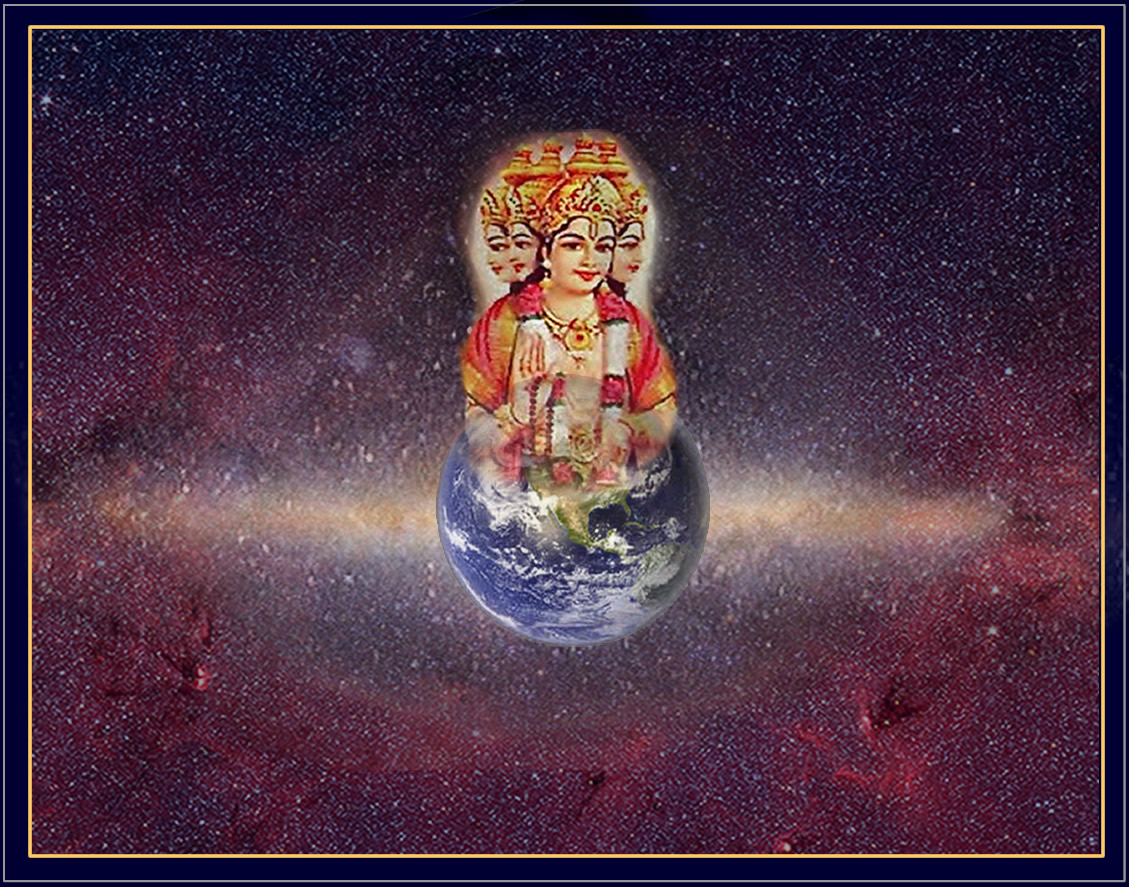
(5) The width of this area all
around the earth [our
material 'island'], this space inside the whorl of the lotus flower
[of
the galaxy unfolding in the night] which is as round as a lotus leaf,
measures a terrible number of yojanas [or light years as we
say
these days*].
Chapter 17:
The Descent of the River Ganges
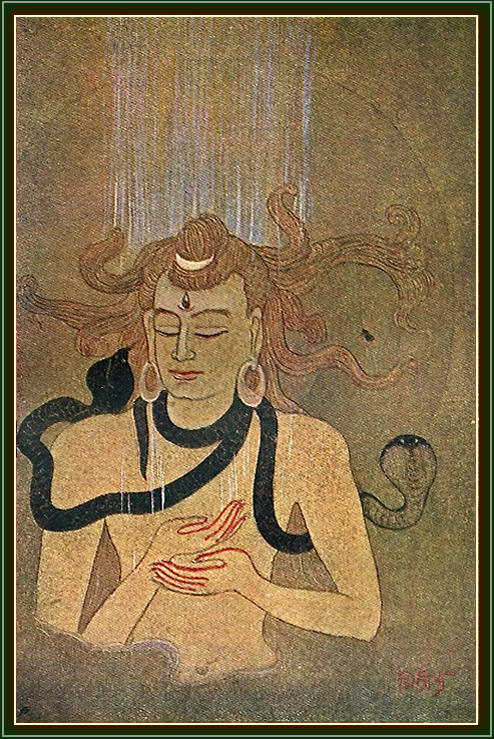
(16) In
the
company
of
Bhavânî
there
are
ten
billion
women who always serve the in
four
expanded Supreme Lord. The fourth expansion of
the Supreme Personality, known as Sankarshana, constitutes the source
of
His form in the mode of ignorance. Lord S'iva, in trance
meditating on Him, calls Him into his heart by reciting the
following in worship.
Chapter 18:
Prayers to the different Avatâras
(15) The Supreme
Lord resides in Ketumâla in the form of Kâmadeva [or also
Pradyumna, see 4.24: 35], according to His
wish to satisfy the Goddess of Fortune as also the sons [the days]
and the daughters [the nights] of the founding father [Samvatsara, the
deity of the year], who rule the land and of whom there are as many as
there are days and nights in a human lifetime. The fetuses of these
daughters, whose minds are upset by the radiation of the mighty weapon
[the cakra] of the Supreme Personality, are ruined and after
one year expelled dead [from the womb] as miscarriages.
Chapter 19:
The prayers of Hanumân and Nârada
and the glories of Bhârata-varsha
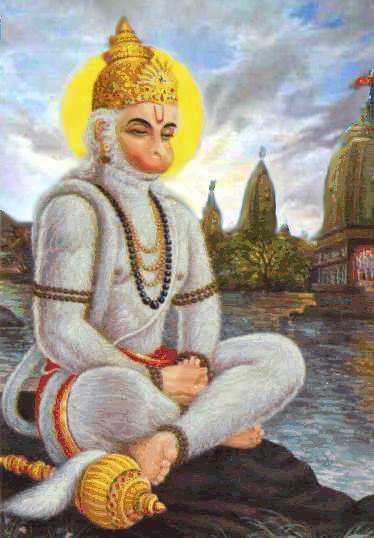
(2) Together
with
Ârshthishena
[the
leader
of
Kimpurusha]
attentively
listening
to
the most
auspicious stories
about his
master and Lordship, sung by a company of Gandharvas, he
[Hanumân] himself prays this:
Chapter 20:
The structure of the Different Dvîpas and
the Prayers by their Different Peoples
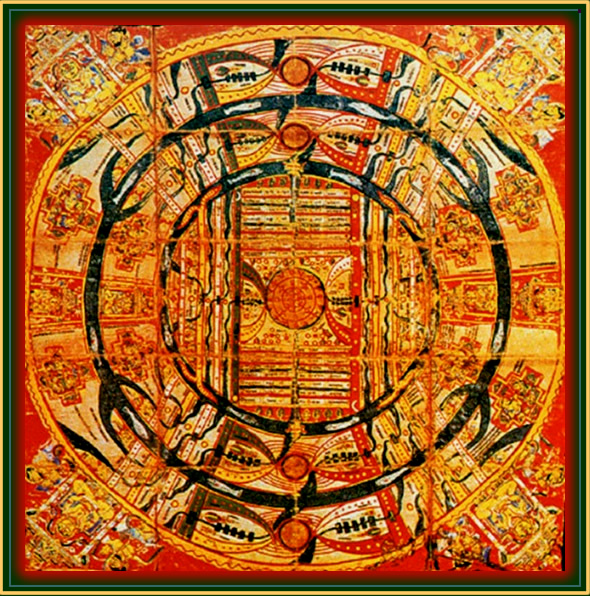
(2) The
way Mount Meru
is surrounded by the dvîpa of Jambû, that dvîpa
on its turn is [as seen
from the inside]
surrounded
by a salty ocean that is just as wide. That ocean is surrounded, like a
moat by a park, by the dvîpa of Plaksha that stretches out twice as much. It was named after the plaksha tree that is as tall
as a jambû but twice as wide. At the root of that tree
which rises magnificently
splendorous, there is
a fire that counts seven flames.
The master of that dvîpa
is the son of Priyavrata named Idhmajihva. When he retired for the yoga of self-realization he divided the dvîpa into seven
varshas that he named after his seven sons.
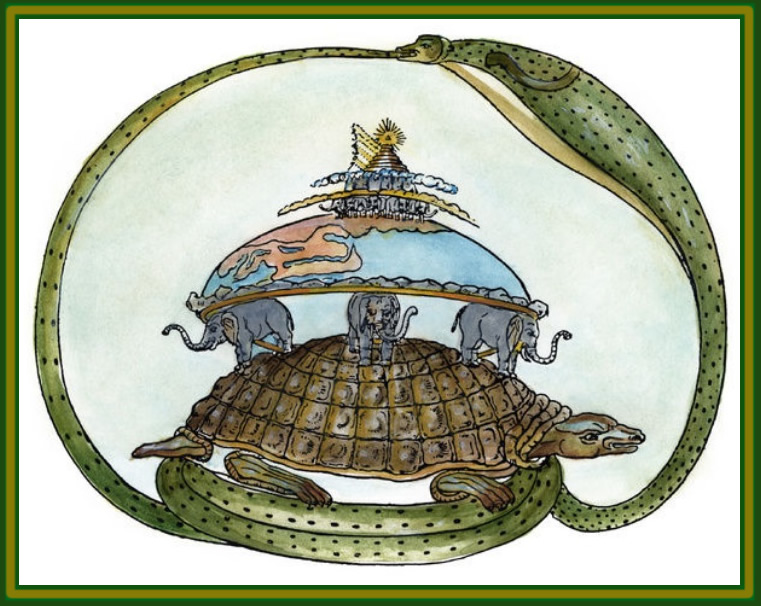
(39) By the source of the
self who is the
spiritual teacher of the entire universe [Brahmâ] the
four gaja-patis ['the
best of all elephants']
Rishabha, Pushkaracûda, Vâmana and Aparâjit are established in the four
directions on top of that
[formation], in order to take
care of the stability of the different planets in the universe.